
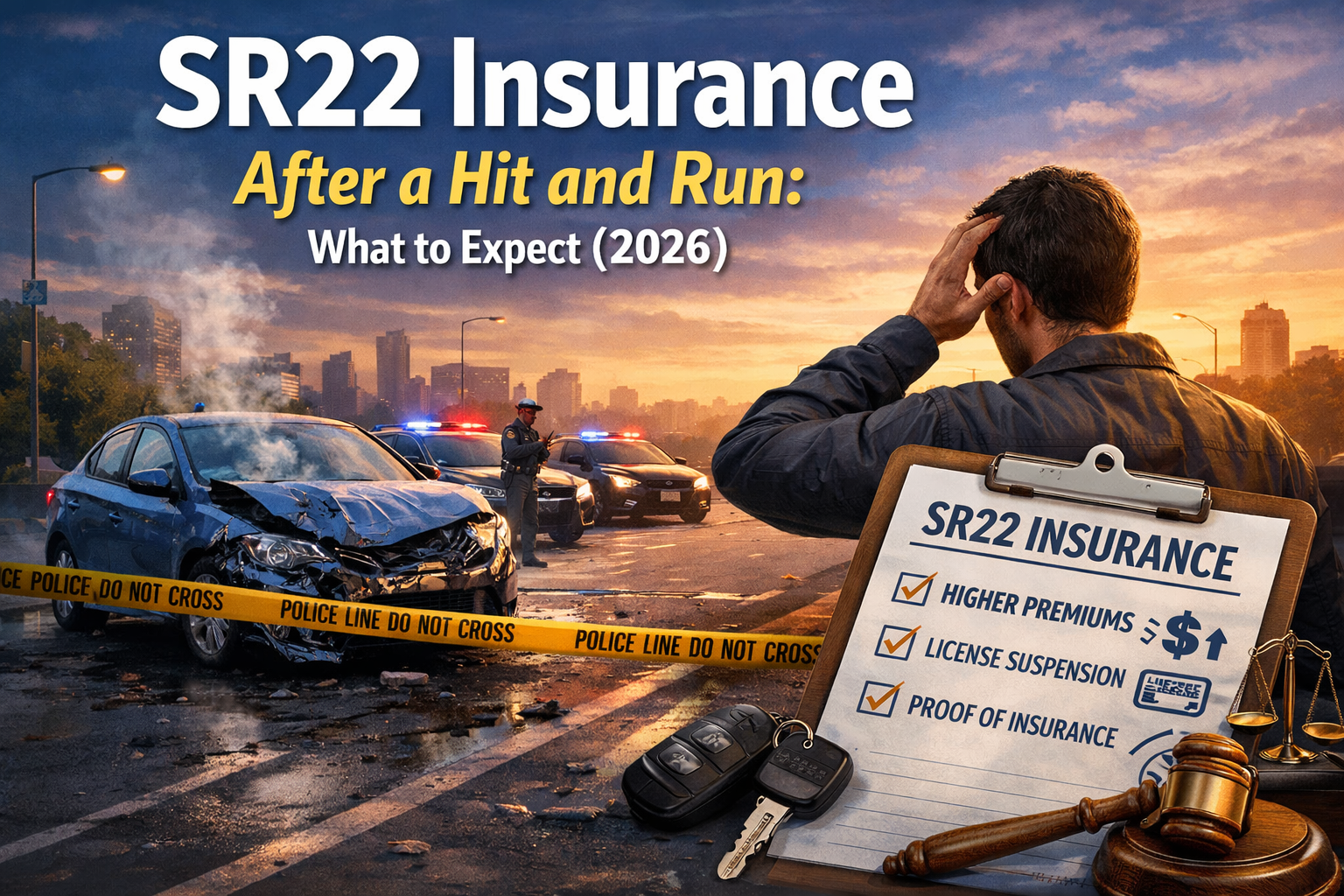
A hit and run conviction is one of the more serious violations that triggers SR22 — and it comes with consequences that go well beyond insurance. Here is what to expect.
Does a Hit and Run Require SR22?
Yes — in virtually all states a hit and run conviction results in an SR22 requirement. Leaving the scene of an accident is treated as a serious violation by state DMVs and typically results in license suspension, which in turn triggers the SR22 financial responsibility requirement.
The severity of the SR22 requirement depends on whether the hit and run involved property damage only or involved injury or death. Property damage hit and run typically triggers a standard 3-year SR22 requirement in most states. Hit and run involving injury typically results in longer SR22 requirements — often 5 years — plus additional criminal penalties.
Criminal Consequences Beyond SR22
SR22 is a DMV administrative requirement — it is separate from the criminal consequences of a hit and run conviction.
In most states a hit and run involving property damage is a misdemeanor. A hit and run involving bodily injury or death is a felony in most states. Felony hit and run convictions can result in significant prison time, large fines, and a permanent felony record.
A felony conviction complicates SR22 significantly because many insurers will decline to write policies for drivers with felony convictions. High-risk specialty insurers and assigned risk plans become more important for drivers with felony hit and run convictions.
What SR22 Costs After a Hit and Run
Hit and run is treated by insurers similarly to reckless driving or an at-fault accident — a serious violation but typically less severe than DUI for pricing purposes in states where it does not involve injury.
For a property damage hit and run, SR22 insurance typically costs $145 to $320 per month depending on state, age, and prior history. For a hit and run involving injury, costs are higher — typically $200 to $420 per month — as insurers treat injury-related violations more severely.
If the hit and run resulted in a felony conviction, expect to pay toward the top of these ranges or higher, as fewer insurers will be willing to write the policy at all and competition is reduced.
Finding Insurance After a Hit and Run
Standard insurers may decline to offer coverage following a hit and run conviction, particularly if it involved injury. High-risk specialty insurers are your most reliable starting point.
Progressive, Dairyland, and The General are the most consistently available for hit and run SR22 drivers. For felony hit and run convictions, your state’s assigned risk plan — the insurer of last resort — may be necessary if specialty insurers also decline.
Be completely honest with insurers when getting quotes. Misrepresenting a conviction to obtain cheaper insurance is insurance fraud, which carries consequences far more severe than the hit and run itself.
Victims’ Rights and Civil Liability
Beyond SR22 and criminal consequences, hit and run drivers face potential civil lawsuits from victims. Even after the criminal case is resolved, the person or entity whose property was damaged or who was injured can sue you in civil court for damages.
Your SR22-backed auto insurance liability coverage is your primary financial protection against civil claims. This is one of the strongest reasons to carry more than the state minimum liability coverage during an SR22 period following a hit and run — the potential civil damages from an injury claim can far exceed minimum liability limits.
Frequently Asked Questions
Related Articles
What is SR22 Insurance? Complete Beginner’s Guide
This article is for educational purposes only. SR22 requirements vary by state and individual circumstances. Always confirm your specific requirements with your state DMV and consult a licensed insurance professional. SR22 Insurance Guide does not sell insurance and is not a licensed insurance agent.