
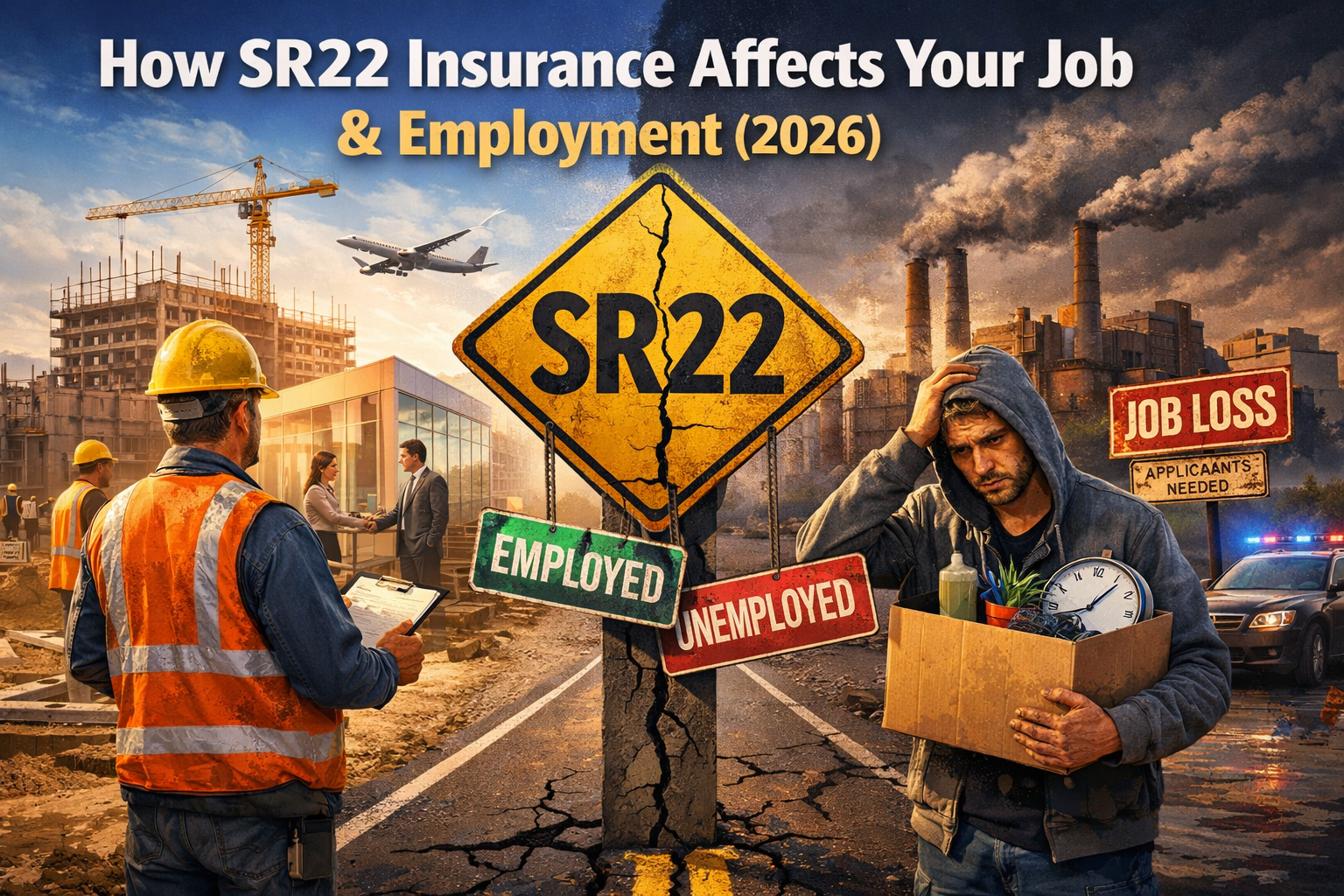
An SR22 requirement can have real consequences beyond insurance costs — particularly if your job involves driving or requires a professional license. Here’s what you need to know about SR22 and your career.
Does SR22 Show Up on a Background Check?
SR22 itself does not appear on criminal background checks or employment background checks. SR22 is a DMV record — it is stored by your state’s motor vehicle authority, not by criminal record databases or credit bureaus.
However the underlying violation that required the SR22 — particularly a DUI conviction — may appear on a background check depending on how the charge was classified. A DUI that was prosecuted as a misdemeanor or felony will appear on criminal background checks. A civil infraction generally will not.
If your employer runs a driving record check (also called a Motor Vehicle Record or MVR check), they will be able to see your driving violations and the associated license suspension — though the SR22 filing itself is not typically included in a standard MVR.
Jobs Most Affected by SR22
Certain jobs are significantly more affected by the violations that trigger SR22 requirements than others.
Commercial drivers (CDL holders) face the most severe consequences. A DUI conviction in a personal vehicle can result in a one-year disqualification from operating a commercial vehicle under federal law. A second DUI results in lifetime CDL disqualification. SR22 in a personal vehicle does not directly disqualify a CDL, but the underlying DUI conviction does.
Rideshare and delivery drivers (Uber, Lyft, DoorDash, Amazon Flex) can be deactivated from these platforms following a DUI conviction or serious driving violation. These companies run regular background checks and driving record checks on their drivers.
Professional license holders in fields such as nursing, law, medicine, teaching, real estate, and financial services may need to disclose DUI convictions or license suspensions to their licensing board. The consequences vary significantly by profession and state.
Government and security clearance jobs may also be affected — a DUI conviction can complicate a security clearance application or renewal, though it does not automatically disqualify a candidate.
CDL Drivers and SR22: Special Rules
Commercial Driver’s License holders face federal regulations that create a separate and more severe set of consequences on top of state SR22 requirements.
Under federal law (FMCSA regulations), a DUI conviction in any vehicle — commercial or personal — triggers a one-year disqualification from operating a commercial motor vehicle. Refusing a breathalyzer test carries the same penalty. A second DUI or refusal results in lifetime CDL disqualification.
SR22 is still required for personal vehicle driving during the CDL disqualification period if the state requires it for the underlying violation. But the CDL disqualification is a completely separate and additional consequence that SR22 does not address.
If you are a CDL holder who has received a DUI, consulting an attorney who specializes in commercial driving regulations is strongly recommended. The stakes — your entire commercial driving career — are high enough to warrant professional legal advice.
Do You Have to Tell Your Employer About SR22?
You generally do not have a legal obligation to proactively disclose an SR22 requirement to your employer — unless your employment contract or company policy specifically requires you to report driving violations or changes in your insurance status.
However if your job involves driving a company vehicle, your employer may discover the violation through regular MVR checks that most companies with fleet vehicles conduct on their drivers. If a company MVR check reveals your DUI or suspension and you had not disclosed it, this can be more damaging to your employment than having disclosed it proactively.
If you drive a company vehicle as part of your job, the safest course is to review your employment contract and company policy carefully and consult HR or an employment attorney before deciding whether and how to disclose.
Protecting Your Career During SR22
The most important career protection during an SR22 period is maintaining a completely clean driving record going forward. Any additional violation compounds your situation significantly — both for insurance purposes and for any employment that involves driving or professional licensing.
If you need to disclose a DUI conviction to a professional licensing board, do so proactively and honestly. Licensing boards consistently treat voluntary disclosure more favorably than discovering a conviction through their own background check process.
For rideshare drivers who have been deactivated, the practical path back involves waiting for the disqualification period specified by the platform to pass, maintaining a clean record throughout, and reapplying through the platform’s reinstatement process when eligible.
Frequently Asked Questions
Related Articles
What is SR22 Insurance? Complete Beginner’s Guide
This article is for educational purposes only. SR22 requirements vary by state and individual circumstances. Always confirm your specific requirements with your state DMV and consult a licensed insurance professional. SR22 Insurance Guide does not sell insurance and is not a licensed insurance agent.