
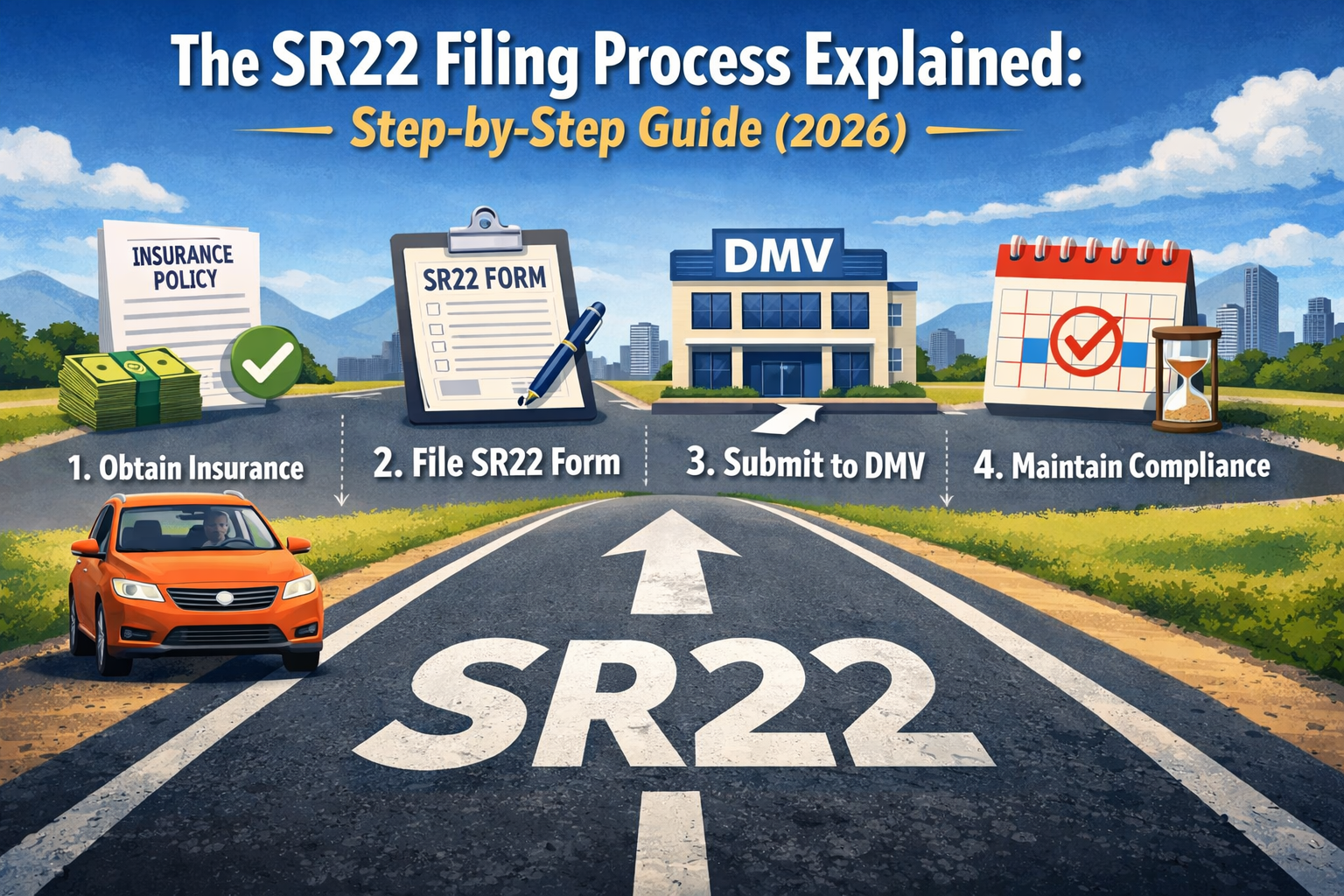
The SR22 filing process is simpler than most people expect — but the order of steps matters, and getting it wrong can cost you time and money. Here is exactly how the process works from start to finish.
What SR22 Filing Actually Is
SR22 filing is the act of your insurance company electronically submitting a Certificate of Financial Responsibility (Form SR22) to your state DMV. This filing tells the DMV that you have the minimum required auto insurance coverage in force and authorizes your insurer to notify the DMV immediately if that coverage ever lapses.
You cannot file SR22 yourself — it must be filed by a licensed insurance company on your behalf. The filing happens electronically in most states today, allowing same-day processing in many cases. For the complete overview of what SR22 is, see our Complete Guide to SR22 Insurance.
The Complete SR22 Filing Process
1Contact the DMV and get your complete requirement list
Before purchasing any insurance, call your state DMV and ask for a complete list of everything required for license reinstatement. SR22 is usually one of several requirements — you may also need to pay reinstatement fees, complete an alcohol program, install an IID, or pay outstanding fines. Get the full list before you start so you can complete everything in the right order.
2Get at least 5 insurance quotes from SR22-capable insurers
Not all insurers offer SR22 filing. Call Progressive, GEICO, Dairyland, The General, and Bristol West — tell each one your state, violation type, and violation date. Ask for a monthly premium quote including the SR22 filing fee. Compare at least 5 quotes before purchasing — rate differences between insurers are often 80 to 120 percent for the same coverage. See our SR22 quote comparison guide.
3Purchase the policy and pay the SR22 filing fee
Once you select the best-priced insurer, purchase the policy and pay the one-time SR22 filing fee of $15 to $50. Set up autopay immediately — this is essential. A single missed payment will trigger an SR26 lapse notice to the DMV and re-suspend your license. Do not wait to set up autopay.
4Your insurer files SR22 electronically with the DMV
Once you purchase the policy, your insurer files the SR22 certificate electronically with your state DMV. Most major insurers complete this filing within 30 minutes to a few hours during business hours. Some insurers can file within minutes. You will receive a copy of the SR22 certificate for your records.
5Confirm the SR22 is showing in the DMV system
Call your state DMV the next business day and confirm the SR22 is showing in their system. Do not assume the filing was received and processed — verify it directly. Once the DMV confirms the SR22 is on file, you can proceed with completing your remaining reinstatement requirements.
6Pay reinstatement fee and complete all remaining requirements
Pay your DMV reinstatement fee, complete any required alcohol or drug education program, install IID if required, and pay all outstanding court fines. Once all requirements are met, the DMV reinstates your license — typically within 1 to 5 business days. See reinstatement fees by state.
How the Ongoing SR22 Monitoring Works
Once your SR22 is filed, your insurer monitors your coverage status continuously throughout your requirement period. If your coverage lapses for any reason — missed payment, cancellation, non-renewal — your insurer is legally required to file an SR26 cancellation notice with the DMV immediately. Upon receiving the SR26, the DMV automatically re-suspends your license.
This is why autopay is non-negotiable. A single missed payment can undo months or years of progress. Read our SR22 lapse guide to understand the full consequences of a lapse.
Switching Insurers During SR22 Filing
You can switch insurers at any point during your SR22 period — and shopping for better rates annually is strongly recommended. When switching, your new insurer must file a new SR22 with the DMV before your old policy expires. There must be zero gap in coverage. Never cancel your current policy until your new policy is active and the new SR22 has been filed.
How the SR22 Filing Ends
When your SR22 requirement period ends, you must actively request removal from your insurer — it does not end automatically. Your insurer will file an SR26 completion notice with the DMV indicating your obligation has been fulfilled. Your premium decreases at your next renewal after removal. See our step-by-step SR22 removal guide for the complete process.
Frequently Asked Questions
This article is for educational purposes only. SR22 requirements vary by state and individual circumstances. Always confirm your specific requirements with your state DMV and consult a licensed insurance professional. SR22 Insurance Guide does not sell insurance and is not a licensed insurance agent.